- Caribbean Compassion Coaching
- Posts
- Control Freak or Freedom Seeker?
Control Freak or Freedom Seeker?
Unmasking the power of perception

Jennifer Dunne
March 22, 2024
How Our Minds Shape Our Reality
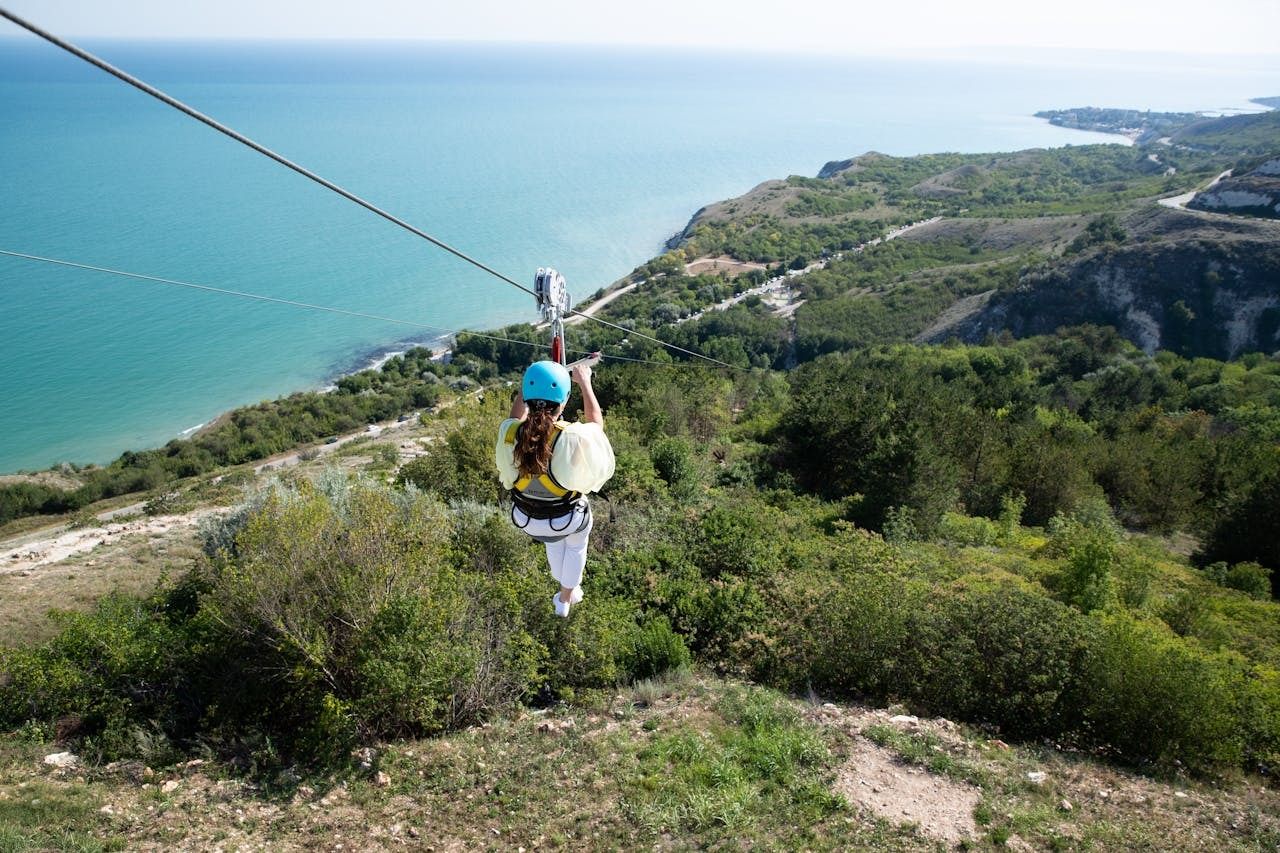
The illusion of control and safety matter more than the reality.
Why do people stay in toxic jobs instead of starting their own business?
The illusion of safety.
In reality, the company can lay off or fire those people with no warning. A business of their own where they call the shots is actually safer.
It starts at an early age
Did you learn to ride a bicycle when you were a kid? Or teach your own kids?
The first step is riding a bicycle with training wheels. That helps the kid master the basic skills, without worrying about the bike tipping over. It’s safe.
The second step is taking the training wheels off, and the parent holding on to the back of the seat while the kid rides. It’s not quite as safe.
How many kids have turned to tell the parent, “I’m doing it!” Only to discover that their parent let go of the seat half a block ago.
It was the belief that the parent was holding the seat and keeping the bicycle steady that gave the kid the confidence to pedal faster. And it was the faster pedaling that kept the bike upright.
The illusion of safety led to real safety.
Which is part of why this is so confusing for us as adults. We internalized the wrong message.
My first zip line: control with some safety
The first time I rode a zip line, I didn't know what to expect. We rode horses up to the top of a hill. We were then supposed to take a series of zip lines down, through amazing scenery, back to the base camp at the bottom of the hill.
At the top of the hill, we put on climbing harnesses. The harnesses were clipped to a descender on each zip line, then unclipped when we reached the end of that line so that we could walk to the beginning of the next.
We were all given leather gloves to wear. We controlled our speed of descent by holding the line in front of and behind the descender.
This was not without risk.
If you held your forward hand too close, it could get caught in the mechanism. The leather gloves would prevent damage to your hand, but you'd come to a sudden and dramatic stop.
If you had both hands too close, you would start spinning, instead of facing to the side as you were supposed to. This would slow your descent, but not stop you. It would also give you motion sickness.
The first leg of the zip line, I wasn't sure what I was doing. The descender mechanism nipped my glove once, because I held onto the line too tightly. My hand wasn’t moving down the line as my harness did. I also picked up a bit of a spin.
I immediately stretched my arms as wide as I could, and let the line slide through my fingers. I gained confidence with every successful leg.
By the last leg, I asked the guides to give me as big a push as they possibly could, so that I could go really fast.
I felt safe and in control, so I wanted to get the most out of the experience as I could.
My second zip line: safety without control
The second time I was on a zip line, the harness was completely different.
Instead of having our climbing harness clipped directly to the zip line descender, we sat on a triangular frame suspended from the line and integrated with the descender. We could not reach the line above us.
This meant that we were at no risk of getting our fingers caught in the descender. And the triangle was a stable shape that would allow us to face forward while descending, without spinning.
However, we had to trust that the single point of support would be sufficient to hold us. Our harness was clipped to that, not the line. So, if we slipped off of the bar, we wouldn't fall. If the triangle broke for some reason, we would remain clipped to it as it fell from the line.
I held on to the sides of the triangle with a white-knuckled death grip. The guides had assured me that it was rated to hold up to 400 pounds, so I had nothing to worry about.
As they pushed me over the edge of the platform, I worried.
I felt slightly less safe, and completely out of control.
My third zip line: no safety, no control
The third time I took a zip line, our climbing harnesses were again clipped directly to a descender. However, we could not touch the line. Instead, we dangled below the line.
We were warned not to grab the harness. The 300-pound safety limit was sufficient to hold our weight. But if we pulled on it, trying to lift our body weight against gravity, we’d double our effective weight. An average person could easily exceed the limit.
Because this was a fear-conquering exercise, there was also no guide to push us off of the platform. The guide made sure that our harnesses were secure and attached correctly, then stepped back. We had to summon the courage to jump. With nothing to hold on to.
There was a popular television commercial running at the time, of a pig riding a zip line.
That pig was my inspiration. If a pig could ride a zip line with nothing to hold on to, so could I. I ran at the edge of the platform (so I couldn’t back out at the last second), holding my arms out and shouting, “Whee!”
It was terrifying.
The only change was perception
What was different between the first zip line, second zip line, and third zip line?
Aside from a few minor differences in set up, nothing.
But they didn’t feel the same. The first one, where I had control, was exhilarating. The second, with safety but no control, was scary but fun. The third, with neither safety nor control, was outright terrifying.
It was the perception of control and safety that mattered. Not the actuality.
Using this in your life
How can you use this to improve your own life?
First, the biggest thing you can do is to take control of some aspect of what’s bothering you. Even when you can’t control the outcomes, you can control the inputs. For example, you can’t control how many people say “yes” to your offer, but you can control how many people you tell about it.
Even if there is absolutely nothing about your situation within your control (such as a prison inmate), you can still control your reaction to it. In fact, controlling your reaction to the parts you can’t control is one of the best ways to increase your happiness and lower your stress.
Second, you can increase your perceived safety. How many times have you been in a car going a little faster than you’d like, and clutched the grab handle? It does absolutely nothing for your safety — it’s designed to help you get in and out of the car. But it makes you feel safer.
So, figure out some “grab bars” or “safety rails” for yourself. What could you do that would reassure you, whether or not it actually made things safer? Setting aside money for a “contingency fund”? Tossing around business problems with a mastermind group? Mastering a “back up” skill?
And, of course, you can also make things actually safer. But as humans, our ability to understand what makes things safe is not the best. We’re set up to recognize immediate threats of bodily harm. Long-term dangers go ignored or unnoticed. And focusing on this too much leads to people unwilling to ever leave their houses for fear of what might happen.
Summing up:
✅The perception of control and safety matter more than the reality.
✅Increase your perceived control and perceived safety to increase happiness and success.
PS - If you're having trouble feeling safe or in control, no matter what you do, you might be suffering from a block. Let's chat.

Top 3 Blocks Dissolved This Week
Fear of being good enough - resolved holding on to mother’s beliefs to honor deceased mother
Difficulty selling - resolved “I have nothing to offer worth paying for”
Being stressed out - resolved “I can’t do anything right”
If you are taking control in your life (see lead article) but are still stressing out and anxious, you may have a block that is holding you back. Drop me a line or message me on LinkedIn to discuss your situation and how I can help.
Inspirational Words
Since at least the days of Epictetus (around 50-135 AD), philosophers have been telling people to stop worrying about things they can’t control. People still need to be reminded of that, because we still worry about things outside of our control.
And unlike in ancient Greece, the scope of things that are outside of our control but could directly impact our lives is so much greater. It just makes sense to worry about at least some of it.
This quote reminds us that we are powerful. And instead of squandering that power, by focusing on what we can control, we can create miracles.
Incredible change happens in your life when you decide to take control of what you do have power over instead of craving control over what you don't.
I started my coaching business to support people who want to change the world. And one of the best ways to change the world is to understand what you have the ability to control and what you don’t.
Focus your power on what you can control, and you’ll change the world.
To your ideal life,
Jennifer Dunne, Caribbean Compassion Coaching